Revision Tips

I really enjoyed these from author Karen E Bender at the Story Prize blog.  #10 resonated with me the most:

Remember that revision is a process and happens in stages. The first stage, you may be trying to find out what the story is about. Then you may develop scenes, layer characters. Later, you may compress scenes/characters. Then you may work on pacing. A late revision focuses on clarity and language. You may work on any of these issues during the process, but try not to get too focused on honing the language too early, as you may not know what will remain in the story. As one writer I know says, “Writing a story is like building a boat. I don’t want to spend too much time intricately painting a hatch when I don’t know if the boat even has a rudder.”

My writing tip in general: Remember that writing takes up a lot of time.

One question worth asking

Some of us know how we came by our fortune and some of us don’t, but we wear it all the same. There’s only one question worth asking now: How do we aim to live with it?

Barbara Kingsolver, The Poisonwood Bible

More Good News

1. The Indiana Review notified me that they are going to be publishing my story, “Come Go With Me,” after it won runner-up in their 2014 fiction contest.  I’ve been following that journal and submitting to them for years, so there’s lots of celebration going on around here about that.

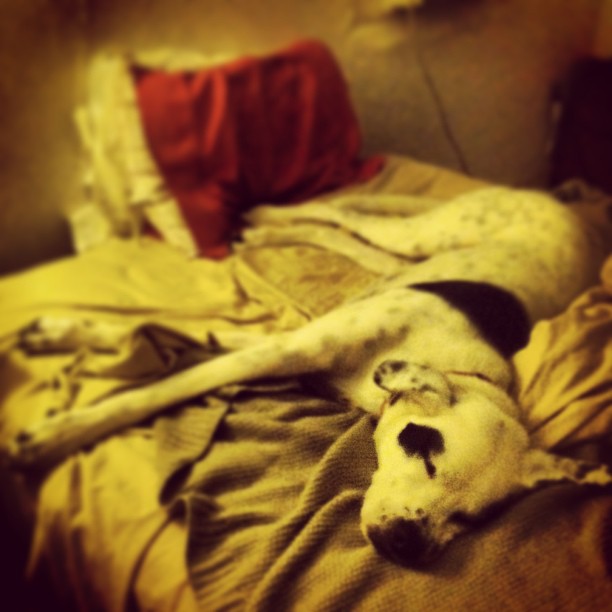
2. My flash story, “The Last Attempt,” appears here in the 30th anniversary issue of Oxford Magazine (Oxmag) with some terrific writers, like David Ebenbach, Bret Anthony Johnston, and Michael Czyzniejewski. Woot.  The story is based a little bit on my dog, Woody, so here’s one of my favorite pictures of him for you to enjoy:

woodilocks“Woodilocks”

Truth vs. Fact

Facts bring us to knowledge but stories lead to wisdom.

Rachel Naomi Remen, MD, “Introduction” to Kitchen Table Wisdom

A Word to Novelists:

The great novels we get in the future are not going to be those that the public thinks it wants, or those that critics demand. They are going to be the kind of novels that interest the novelist. And the novels that interest the novelist are those that have not already been written. They are those that put the greatest demands on him, that require him to operate at the maximum of his intelligence and his talents, and to be true to the particularities of his own vocation.

~Flannery O’Connor, “The Grotesque in Southern Fiction.”

Oil for the Writing Lamp

I’ve been listening to and enjoying a lot of New Yorker fiction podcasts lately. If you aren’t familiar with them, they work like this: an author who was published in the New Yorker at some point reads and discusses another author’s story, which was also published in the New Yorker at some point. Editor Deborah Treisman conducts wonderful interviews at the end of the stories. Most run about 30 minutes, which makes them great for dog walks or housework, or short commutes.  For me, these have been a post-MFA staple.

I’m sharing this one, where Jennifer Egan reads Mary Gaitskill’s story, “The Other Place,” because I can’t stop thinking about it. I’m a big fan of Egan, ever since she came to Tallahassee and I heard her discuss her writing process, which was to write out the entire novel by hand on legal pads and then craft it while she typed it up. I’ve tried this. It doesn’t work for me at all, but I love the idea. Listening to her, though, makes the writing life seem “possible,” and that is always refreshing.

The story she reads forces the reader into dark and ugly spaces (surprise! if you are familiar with Gaitskill at all…), but it does so with a wild amount of understanding and compassion.  Let me use the word “masterful” when I describe this story.  And Egan’s insights are smart.

Here are some other stories/discussions I love:

Boyle Reading Barthelme

Erdich reading Oates

Oates reading Ozick

Writing Surprise (!)

If you’ve taken a writing class (especially one with me because I am obsessed with this idea), you’ve probably heard the Flannery O’Connor quote about how endings should be simultaneously surprising and inevitable.  Tall order? Yes.

I once heard Ira Glass speak about how important the element of surprise is in the stories he and his crew choose to air on This American Life.* I don’t remember the exact quote, just that he alerted me to the fact that writing has to be surprising, at least on some level, to sustain interest. The worst thing a friend can say after reading a draft is, “the ending was too predictable.” (Clutch my heart and fall over.)

I’m thinking about how hard it is to write surprise in stories and essays. It’s just easy (and dare I say, lazy) to be predictable in our writing.  I don’t know who said it to me, but I think surprise happens on the page when we explore options; when we don’t just go with the first idea.  Sometimes our first idea is great, but often, our second idea is even better.

This is the opposite of taking a successful standardized test, by the way, because standardized tests are the opposite of art.

Exploring options means understanding what our options are, which means reading a lot.  That is what it means to “read like a writer”–we’re picking up options, techniques, interesting ways of telling a story, from people who took those risks before us.  Often that means we have to read things twice (once for plot, once for technique).  It also means we have to read slowly, asking the question, “what is the writer doing right now with this sentence/paragraph/chapter?”

Surprise is harder to accomplish when writing creative non-fiction, because we’ve literally been there and done that and now we’re writing about it.  I’m wondering if maybe surprise in a creative essay is more about what you do with what happened–how you reflect upon the facts–than writing the facts themselves.  That is a major difference between fiction and non-fiction. The latter must not only tell a story but make meaning out of that story, and the quality of the essay, I think, has more to do with how the writer reflects than how the writer narrates.

In fiction,  we need to sit back and let our characters do surprising things, often terrible, horrible, disturbing things, but not always.  Mostly, things we don’t expect them to do but when they do them we say, “Ah. That makes sense.” Hence, inevitable surprise. Watch Mad Men or The Wire for example after great example of this.

*I take writers less seriously when they tell me they’ve never heard This American Life.  If you love storytelling then you love this show. Period. (Ha. Feeling a little sassy this morning.)