Four years ago, I introduced you to Rachel Levy. Now she has a novel available for preorder at Caketrain. Way to go, Rachel!


storyteller
Four years ago, I introduced you to Rachel Levy. Now she has a novel available for preorder at Caketrain. Way to go, Rachel!
I realize that this website is one post short of being a David Sedaris fanblog, but I came across this article today from Vice: “David Sedaris Talks About Surviving the Suicide of a Sibling,” which was one of the best interviews I’ve read in a long time.
Not only do we get an authentic discussion of a really tough subject, but also a wonderful collection of Sedaris family photos. At the end I was thinking, “What an incredible family, and we’re so lucky to have it chronicled by such a fantastic writer.”
Tissue recommended.
Did you know that you can get Word of the Day emails from Dictionary.com? I’ve had them for about a month now and I think they’re pretty fun. Today’s word was “Yestreen,” which means “yesterday evening.”
Maybe everyone already knew that but me. That is exactly how I feel every time I learn a new vocabulary word.
Some of us know how we came by our fortune and some of us don’t, but we wear it all the same. There’s only one question worth asking now: How do we aim to live with it?
Barbara Kingsolver, The Poisonwood Bible
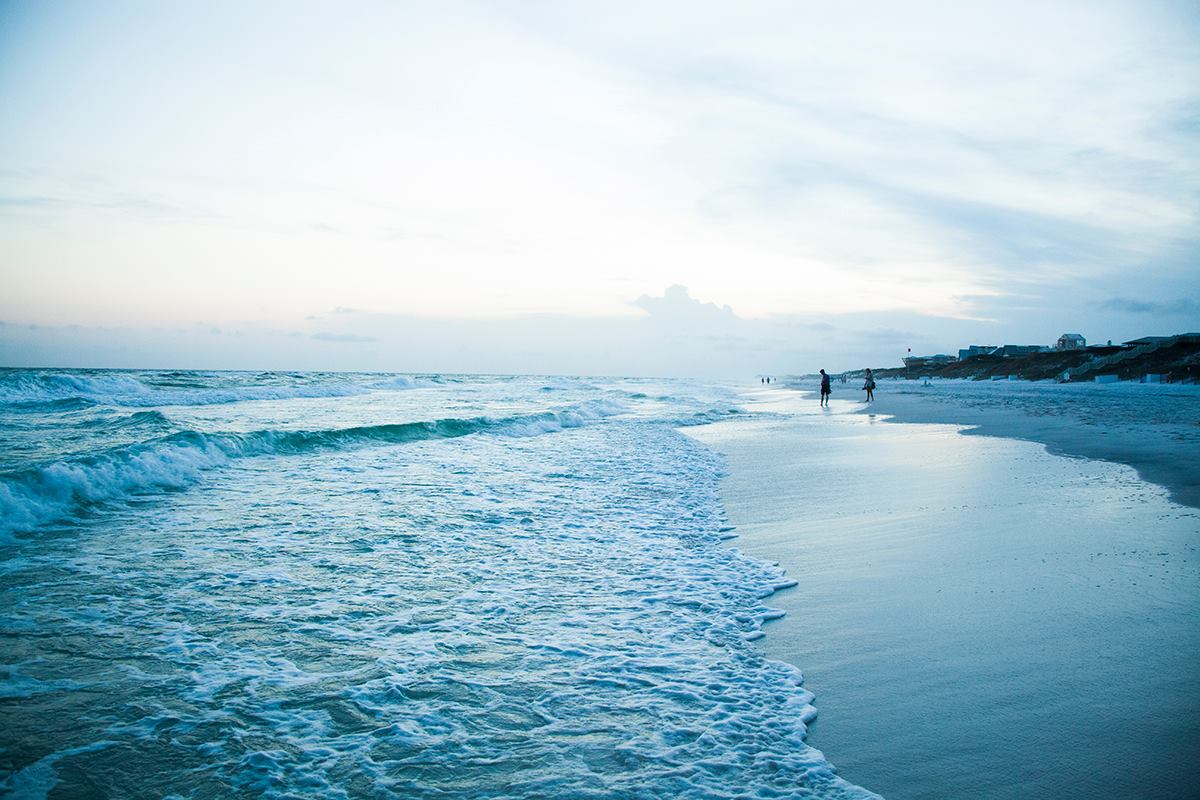 We all know about Tin House, Sewanee, Yaddo, the Vermont Studio, and the FAWC (which I get to attend in June! Woot!), and some of us, like me a few months ago, set our sights on those places for our summers and forget about the smaller, newer and lesser known summer writing conferences and retreats.
I just got back from the Seaside Writers Conference, which was my week out with a group of writers who workshopped stories, attended readings, and hung at the beach together. These writers were fun and helpful and not competitive, which was maybe my favorite part. The FL Gulf beach at Seaside, which also happens to be the set of The Truman Show, was beautiful enough to make me feel that twinge of “I can’t believe I get to do this” and “Why isn’t everyone here?” from time to time.
I have been writing for a decade and a half, but it hasn’t occurred to me until lately to do this kind of writer’s retreat. I have been out of school for a couple of years and I thought I was done with workshop, as a thing, but I learned more in this week than I have in certain semesters. This is probably thanks to Matt Bondurant, who led us through each other’s stories with the right amount of tough, encouraging, and helpful feedback we all hope to get on our work.
I also got to learn how to pitch a book at a New York agent, an intimidating experience that has now been de-mystified. Poets got to study with Seth Brady Tucker for the week, and I attended his flash-fiction talk one morning. Like Bondurant, he is also a tremendous instructor and worth the trip.
I’m curious if any of you writers have had your own great summer writing experience somewhere else. I can’t recommend this one enough.
Last summer, I wrote some scripts for a “Grammar Doctor” series produced by the local community college’s television station. I am happy with the results.
Art matters. It is not simply a leisure activity for the privileged or a hobby for the eccentric. It is a practical good for the world. The work of the artist … is an homage to the value of human life, and it is vital to society. Art is a sacred expression of human creativity that shares the same ontological value as all human work.
Michael Gungor, The Crowd, the Critic, and the Muse
Part of being a writer is applying for things. Classes, residencies, programs, funding, all that. These applications ask for all kinds of letters and statements–personal, financial–mini essays that suck to have to write. Except they don’t have to suck.
As I was writing one today, it dawned on me that I could see these little professional documents as a pain, or I could see them as reminders of why I’m doing this. Each one requires that we articulate what makes us keep writing. It’s good to remember why we persist.
Look at it that way?
This poem by Marianne Moore (1935) resonates with me about the kind of perspective required to be a disciplined writer:
Silence (1935) Marianne Moore
My father used to say,
“Superior people never make long visits,
have to be shown Longfellow’s grave
or glass flowers at Harvard.
Self-reliant like a cat–
that takes its prey to privacy,
the mouse’s limp tail hanging like a shoelace from its mouth–
they sometimes enjoy solitude,
and can be robbed of speech
by speech which has delighted them.
The deepest feeling always shows itself in silence;
not in silence, but restraint.”
Nor was he insincere in saying, “Make my house your inn.”
Inns are not residencies.
—
The superior writer does not rely on other people’s praise to fuel her writing practice. The superior writer does not sit back and wait for something fascinating to write about next. The superior writer goes after life instead of waiting for life to happen–alert, fascinated, ready to take notes and transform experiences into words. The superior writer understands how to enjoy and experience life without sucking the life out of everything and everybody else. The superior writer appreciates it when good things come along, but does not sit around waiting for good things to come along. The superior writer knows how to keep going when good things don’t come along.
According to Neal Delfeld… not on NPR.
 Nora Bonner